
How Redding Residents Come Into View
A person search works best when it separates ownership, occupancy, registration, and historical presence. The Shasta County assessment roll may show a current owner, an owner mailing address, an APN, values, exemptions, and property characteristics. A Recorder result shows parties to an instrument, not a full household. A court docket names parties and events, but a docket is an index rather than the whole file. Newspapers and directories can place a household at an address for a particular year. Each source has a different job in the Redding residents directory.
Start with the narrowest clue. An address leads to the GIS parcel and APN. A full name can lead to court, business, license, or deed records, but common names need more than one matching fact. An older Redding family may appear under Shasta or Old Shasta, a married name, an initial, or a spelling variant. The public trail does not enumerate every occupant or household member, so absence from one roll is not proof that a person was absent.
- Write down the name, address, approximate date, and the question the record must answer.
- Use the Shasta Assessor Public Inquiry or GIS to identify a parcel when an address is known.
- Use the Recorder index, court case search, or state lookup that matches the record type.
- Check a second source, such as a newspaper, vital index, business filing, or directory year.
- Ask the custodian for the underlying record when an index, date, or identity matters.
Redding Resident Records Offices
Redding is the Shasta County seat, so the main record trail is concentrated around county offices and the local library. The Assessor-Recorder at 1450 Court Street connects property inquiry, recorded documents, vital-record copies, Digital Reel access, and county GIS. The City adds permit, legislative, police, and public-record channels. County Elections administers registration records, but California does not turn those records into an open street list.
Shasta County Recorder Division
1450 Court Street
Redding, CA 96001
(530) 225-5671
Shasta County Assessor
1450 Court Street, Suite 208A
Redding, CA 96001
(530) 225-3600
Shasta County Elections
County elections administration
Shasta County, CA
(530) 225-5730
Office channels matter when a web screen stops at an index. The Recorder can explain copy and certification routes, the Assessor offers counter and research services, and the City of Redding accepts identifiable requests through its electronic records channel. The Redding Library is the practical local fallback for microfilm and historical collections.
Redding's Assessor-Recorder Kiosk
The Shasta Assessor-Recorder Kiosk is a useful starting page because it routes visitors to Assessor Public Inquiry, Tax Collector Public Inquiry, Recorder Records Search, Digital Reel, and county GIS. These are separate channels. A parcel inquiry is not a deed image, and a Recorder index entry is not proof of present title. The kiosk also helps a searcher choose the right custodian before paying for a copy or staff research.
The property side is keyed to a fee parcel, assessment number, boat CF number, or aircraft tail number. For an assessment number, the search can be entered in full or narrowed in stages, and books 001 through 099 require leading zeroes. The roll can show APN, situs, current owner or status, owner mailing address, assessed land and improvements, exemptions, characteristics, and parcel history. A homeowner exemption can support an owner-occupancy clue, but it never lists every person connected to the parcel.
| Search By | FEE PARCEL, ASSESSMENT, BOAT CF#, or AIRCRAFT TAIL#. |
|---|---|
| Search value | Assessment numbers may be entered as a full 12-digit value or browsed progressively. |
| Assessment Number | A linked result opens the parcel assessment details. |
| The Quick Menu provides a print control when available. |
Current fees are a separate question. The research records a $12 parcel-history report, a $15 physical-characteristics report, and $33 per half-hour for research or report preparation under the Shasta Assessor fee schedule effective January 10, 2025. Confirm the live schedule before ordering, since a free map, a database print, and a certified page do not answer the same question.
Current Redding Resident Directories
No single current list captures Redding residents. Taken together, these sources form a Redding residents directory trail rather than one complete roll. The closest sources are purpose-built records with different fields and limits. The property roll describes the parcel and an ownership relationship. The Recorder index describes recorded parties. My Voter Status lets a person authenticate their own registration. State professional and business searches show affiliations, which may help distinguish two people with the same name but do not prove a residence.
| Source | What It Can Show | Keeper | Access |
|---|---|---|---|
| Assessment roll | APN, situs, owner status, mailing address, values, exemptions | Shasta Assessor | Public inquiry and counter channels |
| Recorded-document index | Grantor, grantee, instrument, date, number, book/page when used | Shasta Recorder | Free index; copies and certification have fees |
| My Voter Status | One user's status, party, polling place, ballot information | California Secretary of State | Authenticated self-lookup |
| DCA license search | License identity, type, status, dates, public address or discipline when supplied | California DCA and boards | Free public search |
| Library and newspaper collections | Past names, addresses, notices, obituaries, and community ties | Shasta Public Libraries | Library access, microfilm, or card login |
Use the source that fits the claim. An owner mailing address is not the same as a situs address. A business agent is not automatically a resident. A newspaper notice is a dated clue, while a certified vital record has a different access rule. The one-person workflow on the Redding resident lookup page puts those distinctions into a name-check sequence.
Redding Voter Status Has Limits
California My Voter Status is an authenticated self-lookup, not a public Redding street roll. It asks for first name, last name, full date of birth, and either a California driver license or identification number or the last four Social Security digits, with a checkbox for users who lack an identifier. The result can show registration status and location, party preference, language preference, polling place, upcoming election information, and vote-by-mail or provisional-ballot status.
Government Code section 7924.000 and Elections Code section 2194 protect home street address, phone, email, precinct and identification numbers, prior registration data, license or ID data, Social Security data, and signatures. The Secretary of State can release qualifying files for election, political, scholarly, journalistic, or governmental purposes. A statewide file costs $100 for qualified applicants; a named-voter request costs $30 per record and can cover up to ten people, capped at $100 per application. Commercial and private personal use are not permitted routes.
The California My Voter Status portal is the source shown for an authenticated self-lookup.
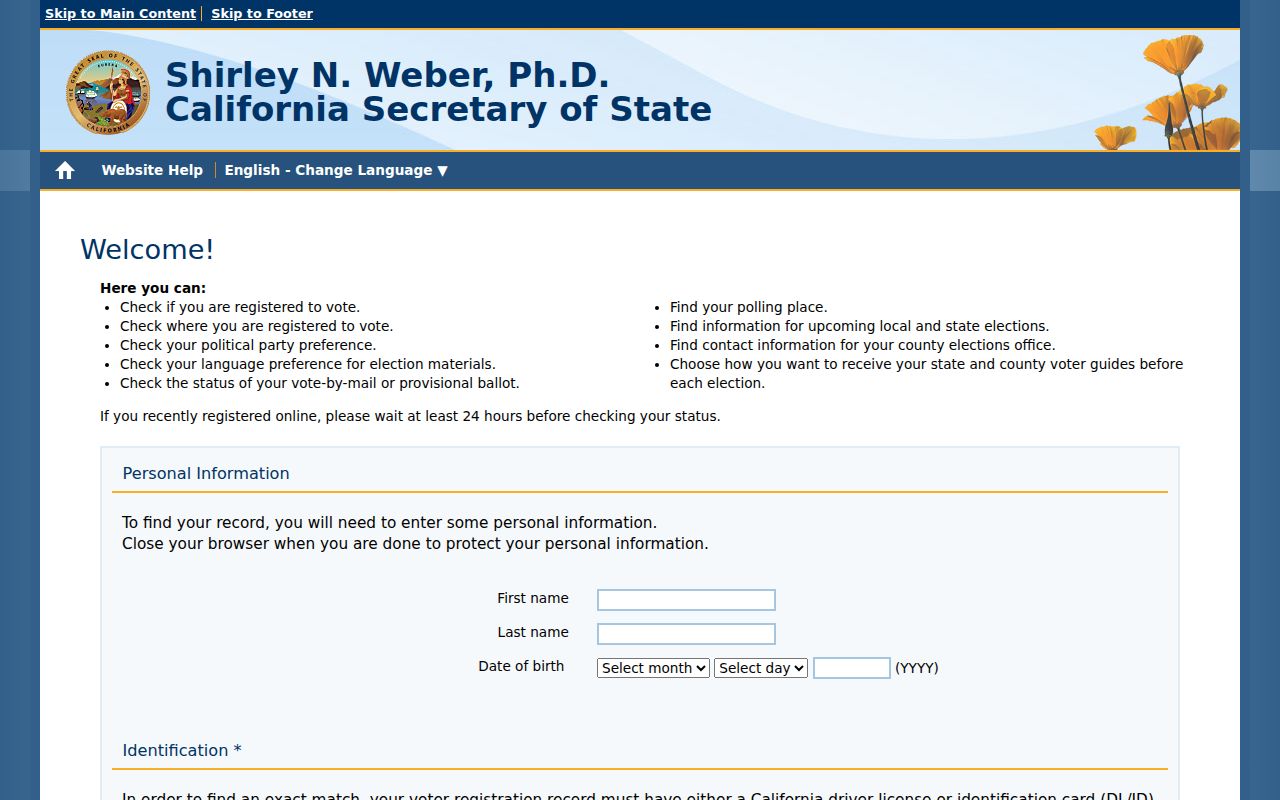
Search the right roll. A voter result answers a registration question for the authenticated voter. It does not establish that every person at an address is registered, or that a registered person still lives there today.
Safe at Home can also replace a participant's address with a designated substitute mailing address in voting, court, government, and certain property-record settings. The program does not erase material that was already public. A missing address can therefore reflect lawful protection rather than a failed search.
Redding Deeds Form a Name Trail
The Recorder Public Web Self Service landing screen requires acceptance of a disclaimer. Its own warning compares the index to a library card catalog and says it is only a guide to the underlying document. Search surname variants, initials, punctuation, married names, reversed order, and both party roles. The live form can use Party Name, Document Number, Recording Date or range, Document Type, and Book/Page. The exact online start date and full document-type dropdown remain unconfirmed in the public crawl.
A result may list party names and roles, document type, recording date, instrument number, book and page, cross-references, and a possible image link. It does not establish present title by itself. Read the deed image and legal description, match the parcel, and distinguish an owner, a borrower, a lienholder, a return address, and an occupant. If the index stops before the needed book, carry the latest citation to Digital Reel, the physical index, deed books, or Recorder staff at (530) 225-5671.
That distinction is especially useful in family history and seller-safety research. A deed can identify a transaction or parcel relationship without telling who slept in the house. The address chain belongs on the street-by-street record path, while the historical household layer belongs in the library's directories and newspapers.
Redding Court and Vital Record Checks
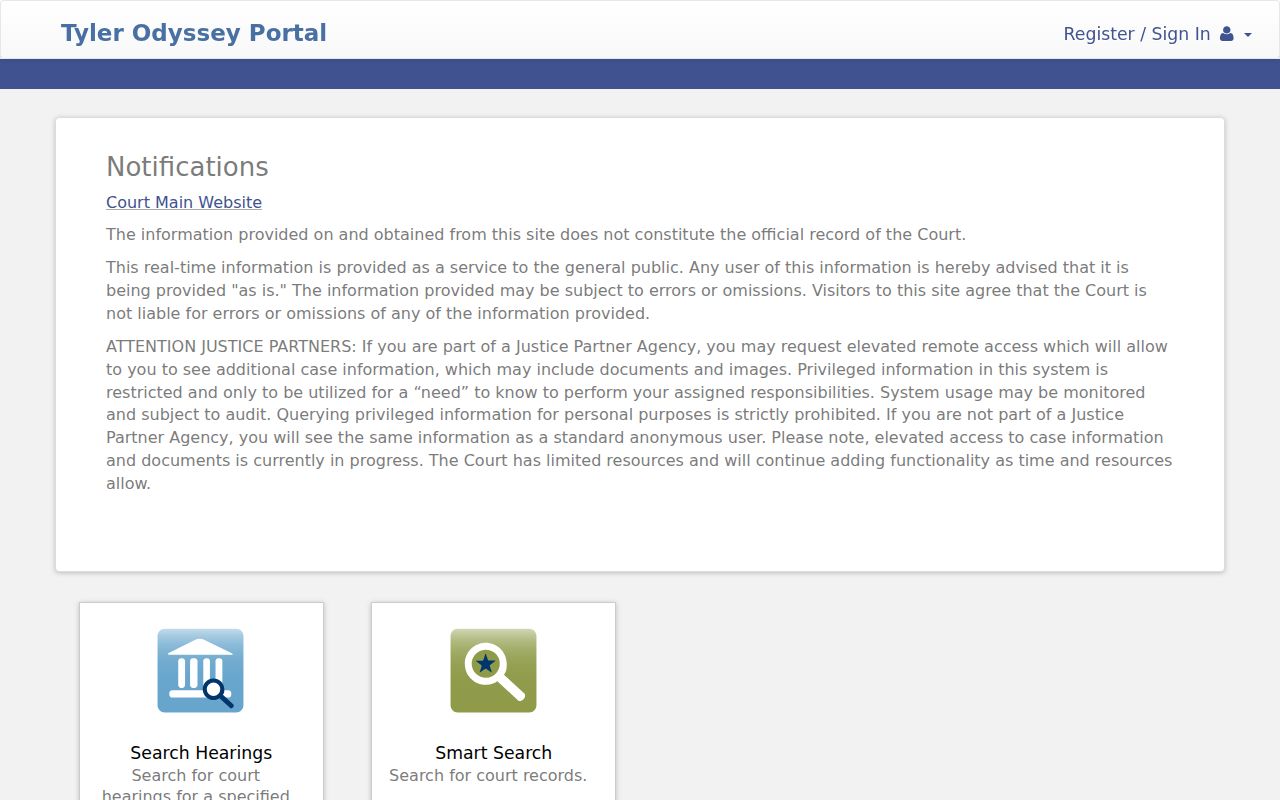
Shasta Superior Court's local case-information service searches by case number or party name, with first name and case type available where enabled. A result can show case number, title, filing date, case type, party roles, event register, hearings, disposition, and financial entries. The portal states that its data is not the official record and may have errors or omissions. Remote document images are generally unavailable, and juvenile, adoption, sealed, and confidential matters have additional limits. The Records Department at 1515 Court Street is the fallback; the Civil Division lists 8:30 a.m. to 4:00 p.m. hours and (530) 245-6789.
Vital records follow a different access model. Shasta Recorder and California Department of Public Health handle local Redding births, deaths, and public marriages. California distinguishes authorized copies from informational copies rather than opening every record after one universal number of years. Health and Safety Code sections 103526 through 103526.5 control authorized-copy eligibility, while a confidential marriage is restricted under Family Code section 511. Historical indexes can reveal an event name, date, place, or related names without granting access to the certificate image.
The Shasta Superior Court case-information portal is the source shown for the local court search.
| Access path | What it offers | What to verify |
|---|---|---|
| Official county or state index | Named custodian, defined fields, dates, and record roles | Read the underlying document or apply the copy rule |
| Library or archive collection | Newspapers, directories, maps, and historical context | Confirm the item, date, and repository before citing it |
| Commercial compilation | Convenient lead across mixed public and purchased data | Expect stale or merged names and confirm with the custodian |
Redding Requests Through JustFOIA
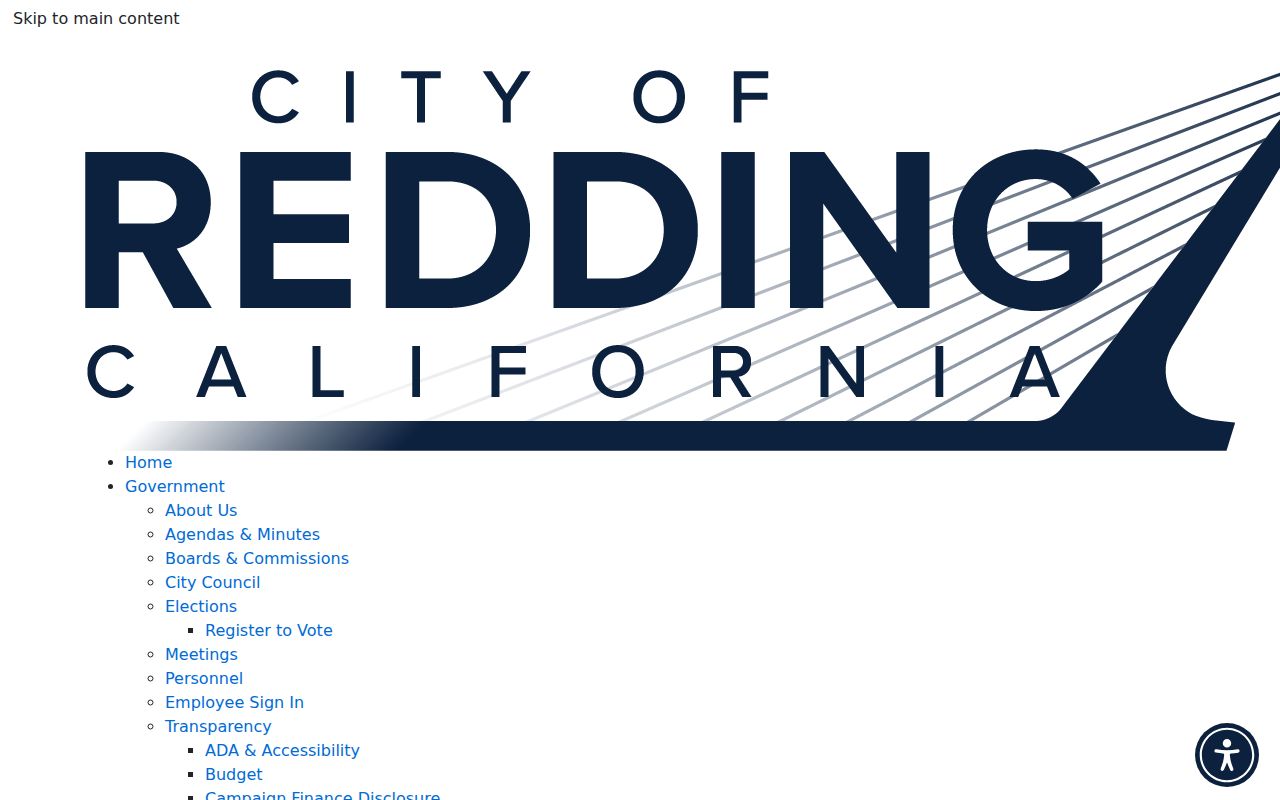
Redding city records fill a gap between county rolls and personal history. The City's public-records page routes requests through JustFOIA, where a requester can submit a focused description, track the request, and receive electronic records. A useful request names an address, APN, permit or case type, and date range. The California Public Records Act does not require the requester to explain a personal purpose, but it does work best when the requested records are identifiable.
Permit history can date construction, additions, fire rebuilding, changes of use, and contractor involvement. It is evidence about an address, not proof that the permit applicant lived there. In 2026, Redding moved building permits into EnerGov Self Service, including HVAC, water-heater, and roofing work. The Permit Center is at 777 Cypress Avenue, first floor, open Monday through Friday from 8:00 a.m. to 3:00 p.m., with (530) 225-4013 and permitcenter@cityofredding.gov for permit questions. Monthly detail reports can expose permit number, parcel, location, work class, valuation or description, and issue date.
The City of Redding public-records page shows the request path and related permit-history channel.
The California Attorney General's CPRA overview explains the statewide request framework used when an identifiable City record is not already online.
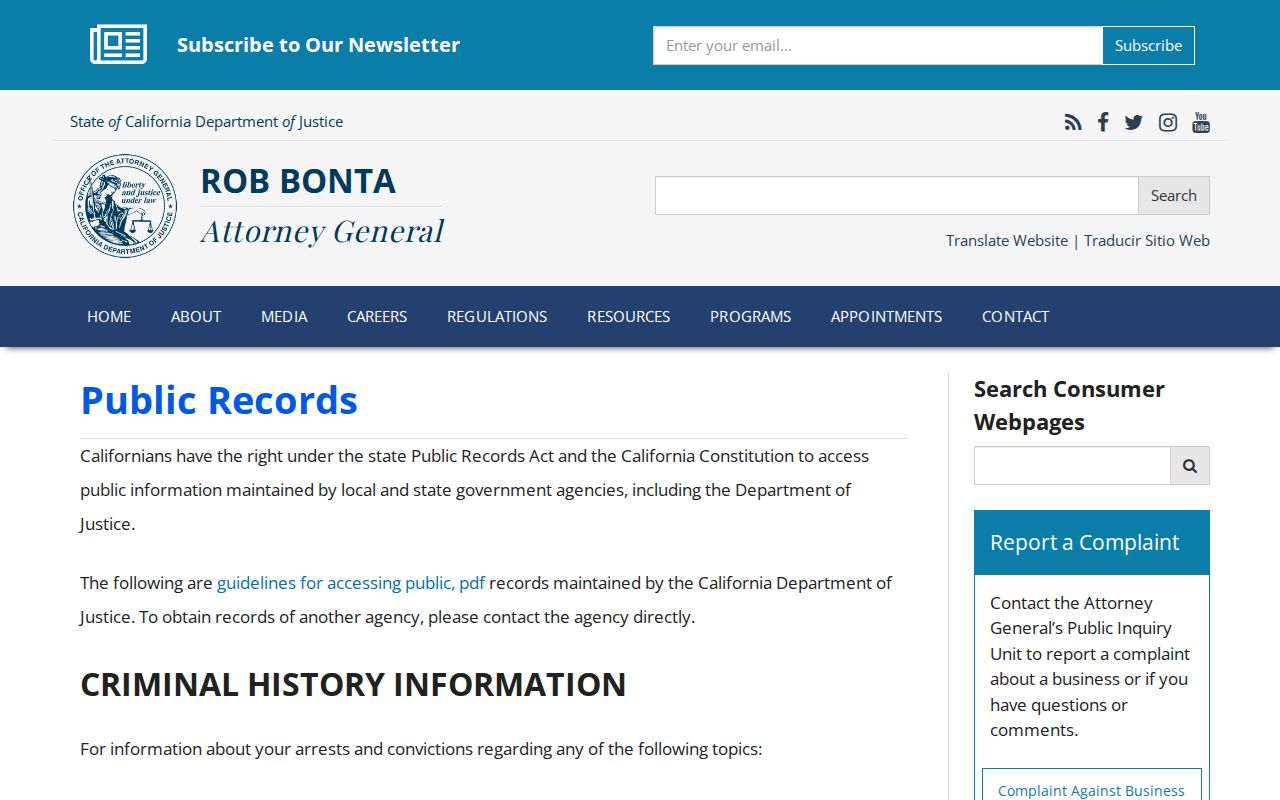
The CPRA image belongs to the request route, not to a claim that every public record will be disclosed.
Laserfiche adds resolutions, ordinances, minutes, policies, agenda staff reports, and records drawings. A person's name, parcel, project, or address may appear there. Police records are a separate route through the Redding Police Services Division, whose Records Unit handles lawful release, retention, subpoenas, warrants, statistics, and incident reporting, subject to redaction for investigations, victims, juveniles, and confidential information.
The Redding Library Memory Layer
Redding Library's genealogy area is the strongest local answer when an online search loses an older name. It has two dedicated genealogy computers, volunteers, bound works, periodicals, newspapers, and microfilm. The reference desk is (530) 245-7252. The Boggs Local History Collection exceeds 2,000 items and includes maps, community histories, newspapers, and California Indian Library Collection material. Some items sit in locked cases, while many can circulate.
Shasta County newspaper microfilm runs from 1852 to the present. NewsBank supplies searchable Record Searchlight text from March 10, 1991 to current and Anderson Valley Post text from May 3, 2006 to current with a library card. The obituary request form asks for a name or event and a Shasta County date, plus requester contact details and a choice about a mailed copy. That specificity makes a directory disappearance easier to test against a death notice, move, or spelling change.
All three Shasta Public Libraries are FamilySearch affiliates. Restricted digitized images that cannot be viewed at home may open on an affiliate computer. State Archives, Sutro Library, the California History Room, and the Shasta Historical Society at 1449 Market Street are additional stops for material absent from the local catalog.
Historical Redding Resident Directories
A historical Redding residents directory is a household snapshot, not a permanent identity file. The public library pages do not verify a local publisher or year run, so a searcher should check the catalog item by item and confirm holdings with the reference desk before asserting that a volume exists. A typical entry may carry a surname, given name or initial, spouse in parentheses, widow notation, occupation, business address, residence, owner or renter mark, and an abbreviation key. Do not present a typical format as a verified local page.
The library's verified companion shelf is rich. Covered Wagon runs annually from 1943 to current. The California Death Index linked by the genealogy page covers 1940-1997, and statewide marriage-index microfiche for 1961-1981 is described through the Family History Library network. Library of Congress Sanborn scans for Redding are dated 1885, 1889, 1896, 1904, and 1912. Those maps show structures, use, material, and street-number context, but not occupants.
- Roll
- A recurring official list, such as an assessment roll, built for a defined administrative purpose.
- Index
- A finding aid that points to a record; it may omit context or contain a spelling error.
- Parcel
- A mapped tax unit identified by an APN, with a situs and legal description.
- Criss-cross directory
- A reverse section arranged by street and house number, useful for occupants and nearby households.
Redding Privacy and Protected Addresses
Public-record access has boundaries even when a name appears in an index. California's Consumer Privacy Act, as amended by the California Privacy Rights Act, gives covered consumers rights to know, access, delete, correct, limit some sensitive-data uses, and opt out of sale or sharing. The Delete Act creates a state deletion mechanism for registered data brokers. Those rights apply to covered businesses and do not rewrite county record rules.
Safe at Home gives eligible survivors and other protected participants a substitute mailing address. Voter signatures and identifiers are confidential, DMV data is restricted by the federal Driver's Privacy Protection Act, and recorded documents can have specified sensitive numbers redacted through statutory procedures. A custodian may withhold information or supply a redacted copy without making the underlying record disappear.
Lawful personal use. Use Redding records for family history, reconnecting, civic research, property curiosity, or personal safety. Do not use a name or address trail to stalk, threaten, impersonate, or harm another person.
Redding Records After Fire and Rebuilding
Wildfire and rebuilding can make an address look inconsistent across years. The Assessor explains Revenue and Taxation Code section 170 relief when qualifying damage or destruction reaches at least $10,000 of current market value. A damaged parcel may then have assessment notices, relief claims, permits, and changed property characteristics. Those records explain a break in a property trail without proving that a resident moved or that a household ended.
The May 2025 courthouse water intrusion also shows why access conditions need a date. The new Redding courthouse had opened in February 2024, then temporarily closed portions of the building after water affected courtrooms, filing-system or clerk-office areas, and the ground floor. A portal outage, a missing remote image, and a missing record are not the same thing. Check the office or clerk before drawing a conclusion.
For a current address, pair parcel geometry, APN, legal description, assessment history, permit dates, and the Recorder index. For a past household, add newspaper microfilm, obituary research, census schedules through 1950, and whatever directory volume the library confirms. The result is slower than a name-only hit, but it keeps the record role and date visible.
Redding's County-Seat Records Advantage
Shasta County was created in 1850, and Redding later became its county seat. Early records may therefore be cataloged under Shasta or Old Shasta rather than the modern city name. Redding's 1872 townsite, 1887 incorporation, 1969 Buckeye addition, and 1976 annexations of Cascade Community Services District and former Enterprise PUD also matter when an address crosses a jurisdictional story.
The Sacramento River, rail corridor, timber and mining history, Shasta Dam growth, and wildfire rebuilding shaped the local record trail. They are useful search clues, not proof of where a person lived. Searchers should keep a name's initials, compound surnames, Indigenous or immigrant naming patterns, remarriage, corporate ownership, and trust ownership in view. The strongest Redding residents directory result is a dated chain of modest claims, each tied back to its custodian.
When a web result is thin, use the Kiosk's alternate channel, ask for a narrow CPRA record, visit the library, or move from an index to the underlying file. The goal is not to force every name into one list. It is to find the right record, understand what it can show, and stop where California's privacy rules require the search to stop.